
When we first began, I wanted to open the hive every day, just to look inside. The beekeeper said: "no — wait. Bees can tell when you are in a hurry." He was right. There is one good moment, and many wrong ones. These are the five you need to know.
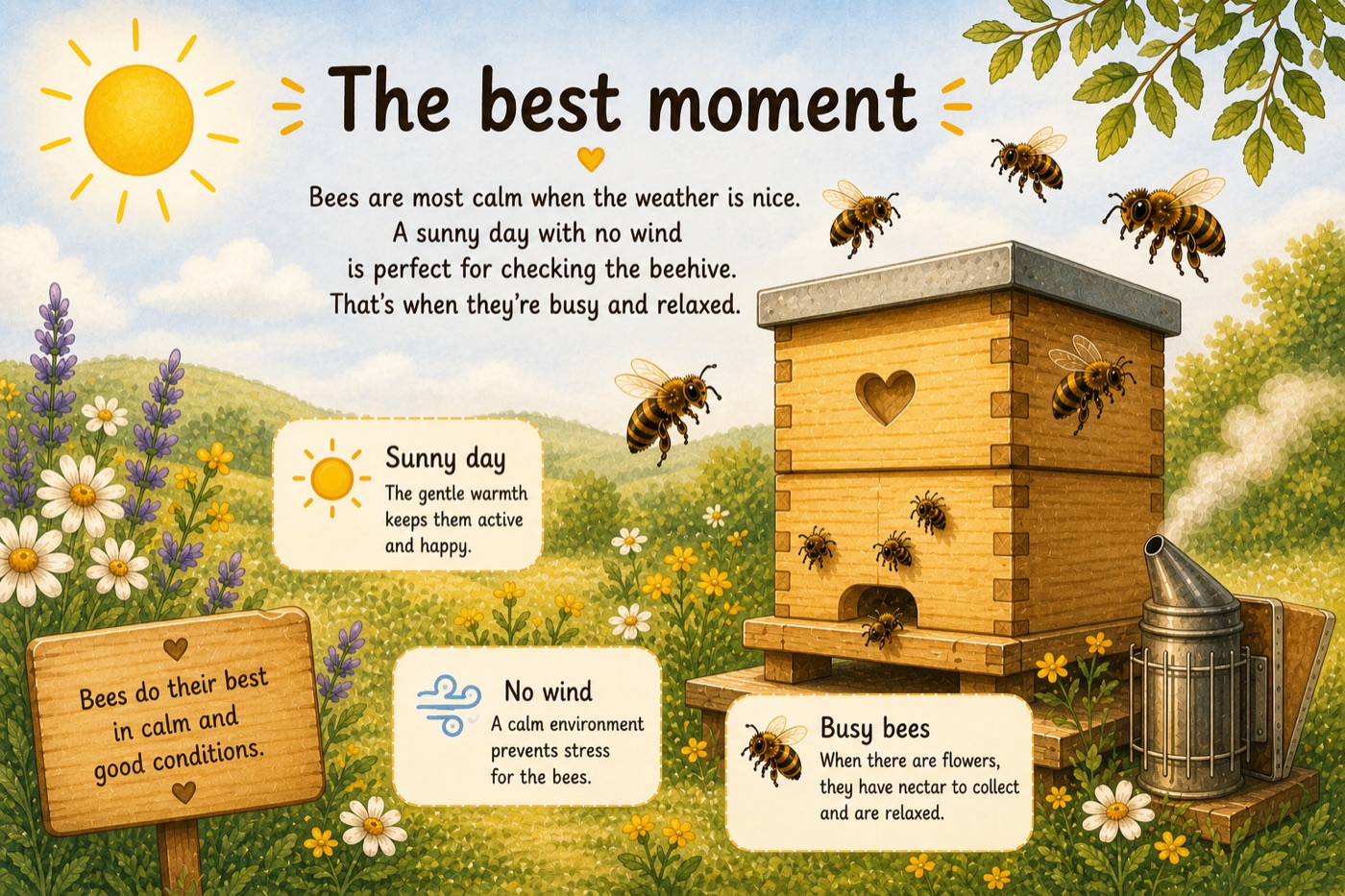
1. The best moment
The bees are calmest when the weather is kind. A sunny, windless day is perfect for checking the hive. They will be busy and at ease — the foragers who have gone out to the flowers are away, and inside there is more room to look quietly.
In La Canalosa we usually open between ten and two, when the sun is warm but not yet burning.
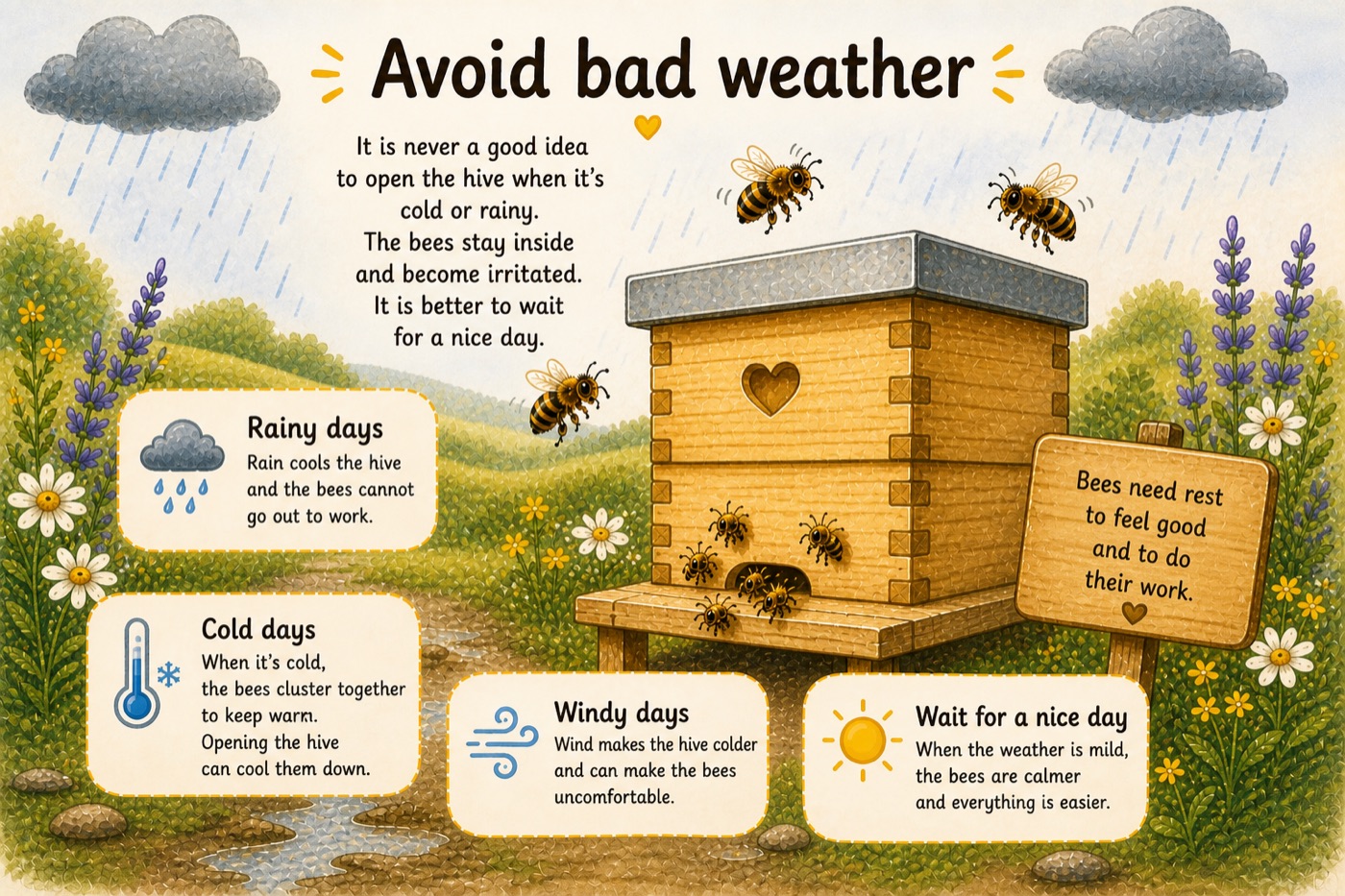
2. Avoiding bad weather
It is never a good idea to open the hive when it is cold or raining. All the bees are inside, and they become uneasy. Worse, cold air can chill the tiny babies if the hive stays open too long.
The bees do not like wind, either. It makes the hive shift and sets them on edge. If the hum sounds higher than usual, it is better to close everything and come back tomorrow.
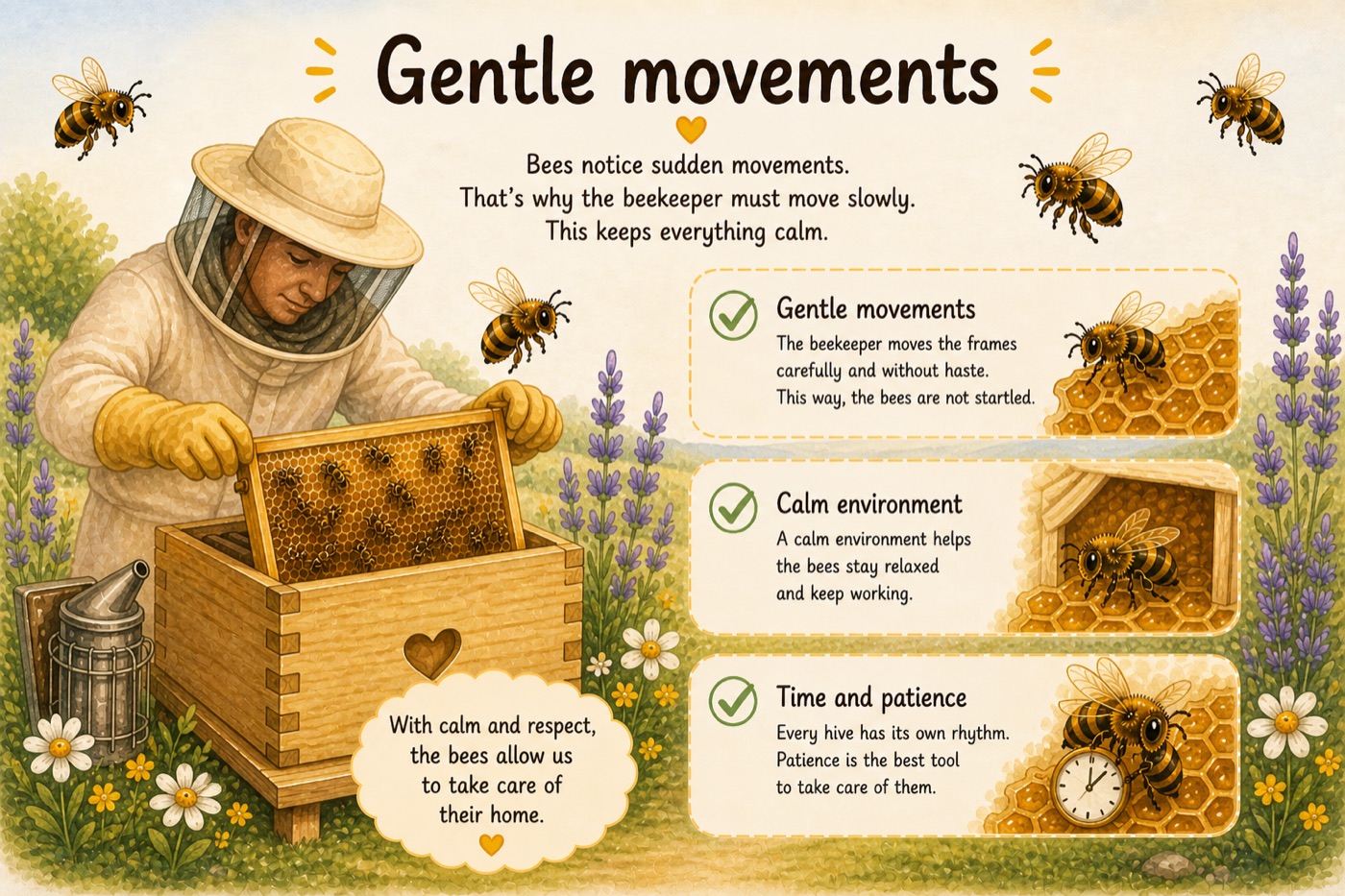
3. Moving gently
This is the hardest part. The bees feel absolutely everything — a hand that moves too quickly, a nervous arm, someone breathing fast. If you are anxious, they will be too.
The beekeeper lifts the frames as though he had all the time in the world — as though there was nothing else to do anywhere. And I try to do the same. Each frame is a whole movement, unhurried. If the hive starts to feel restless, we stop and we breathe.
When a frame begins to feel heavy in your hand, it means you are moving too fast. Put it down. Breathe.
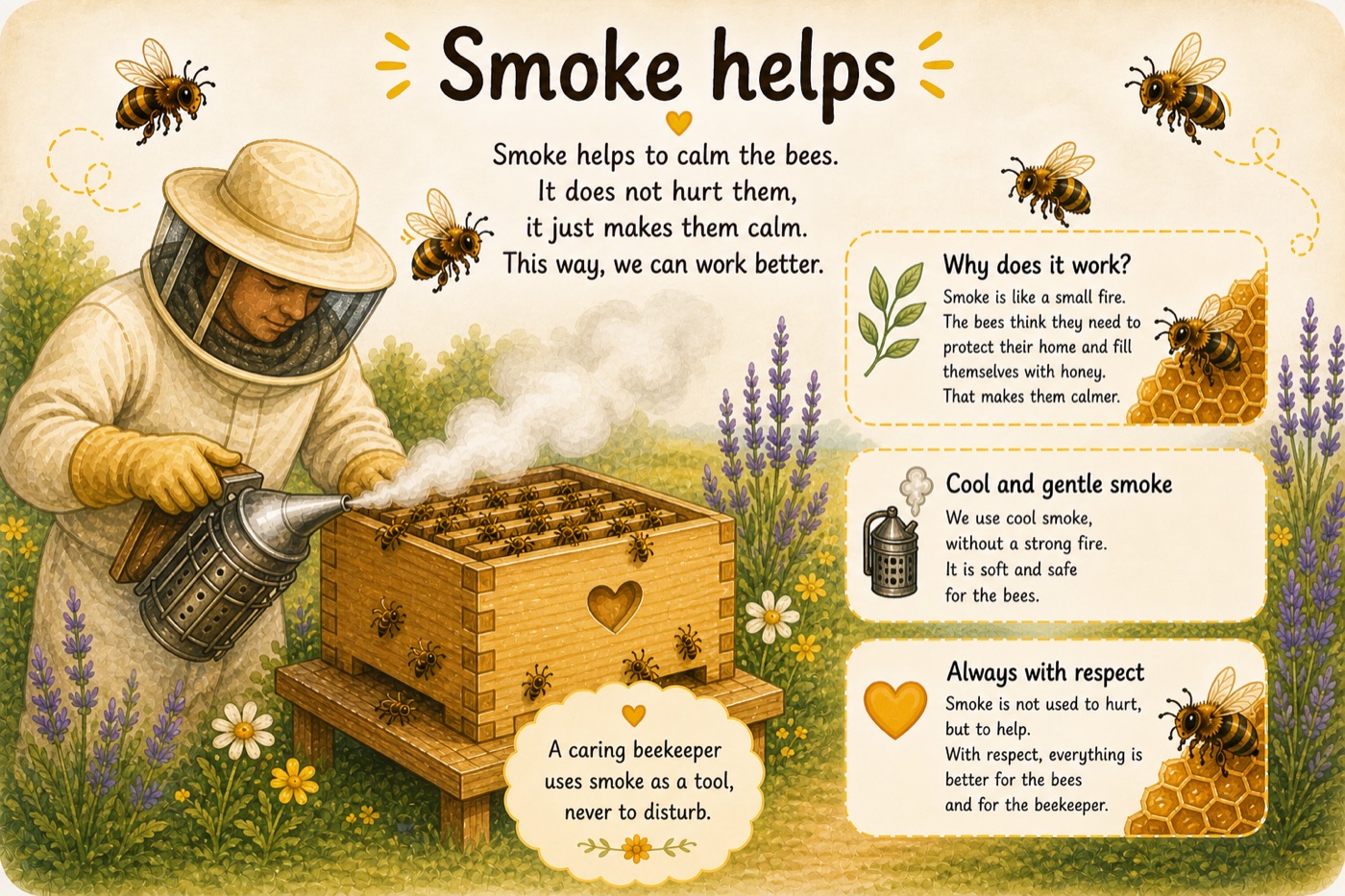
4. Smoke, used kindly
Smoke is the oldest trick in the world. When the bees smell smoke they think there is a small fire nearby, and they begin to fill themselves with honey in case they have to leave. A bee full of honey does not want to sting — she is too busy, and too full.
Two gentle puffs at the entrance, two more above, and we wait a minute. Our smoke is cool and soft — never strong fire. Smoke is for helping, never for harming.
5. Respect for the bees
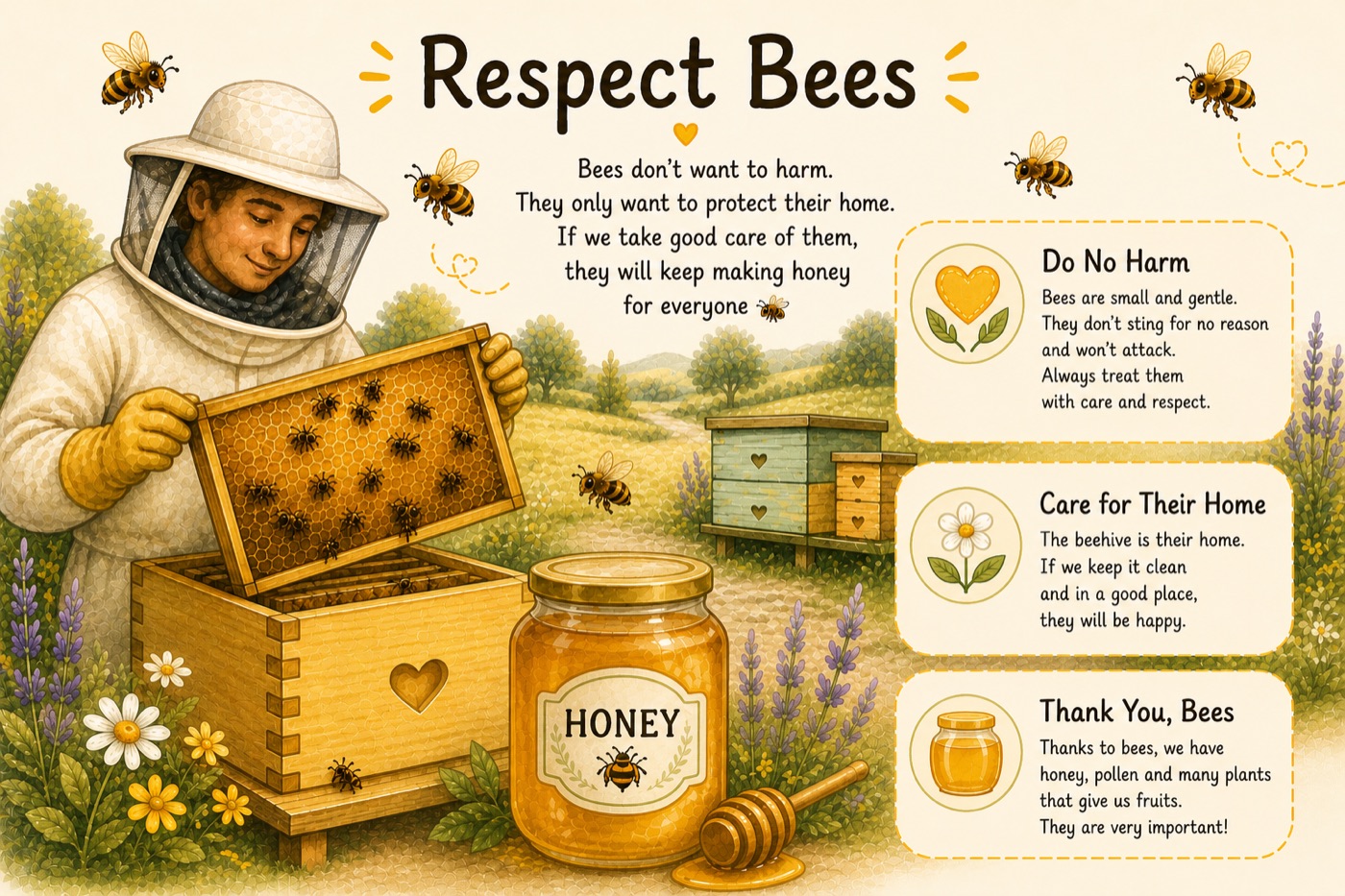
This is the most important rule of all, and the one my mother reminds me of every time we walk up to the hives. The bees are not trying to hurt us. They are only protecting their home. If we take good care of them, they will go on making honey for all of us.
That means: not opening the hive when there is no need; not taking more honey than they can spare; never touching the queen; and saying thank you before we close the lid. I say it quietly, "thank you, bees." My mother smiles — but I believe they hear.
Thanks to the bees we have honey, pollen, and the many plants that give us their fruit. They matter to all of us.
Questions people ask me
When is the best time to open a hive?
On a sunny, windless day, between ten in the morning and two in the afternoon. The bees are calmer, many of the workers are out gathering nectar, and there is more room to look quietly inside.
Why do beekeepers use smoke?
The smoke makes the bees think there might be a small fire nearby, so they fill up on honey in case they need to leave. Bees full of honey are calmer and almost never sting. We use only cool, gentle smoke — never to cause harm.
How often should you check a hive?
In spring and summer, every seven to ten days is enough. In winter we hardly open them at all — we only listen from outside. The less we disturb them, the happier they are.
Is it dangerous to work without a suit?
It is not a good idea — not even for the most experienced beekeepers. The suit protects you, but it also reassures the bees: they know you are not a threat to defend against.